Showing posts with label Beautiful Things. Show all posts

Saturday, 27 September 2014

Beautiful Things - Apple Cider and Pumpkin Pie

Apple season! My favourite time of year!

Seasonal foods may be new to some of the learners in your classes. 
Build in cultural experiences by bringing in culinary favourites for this time of year.
Be sure to ask about allergies, and be aware of dietary restrictions around lard as it is often in pie crusts.

Build from what the learners know, and expand vocabulary.

Use the five senses to describe pumpkin pie and apple cider.


Literacy Considerations
1. Change activities often. Do this kind of activity 20 minutes before break time to break up the day.
2. Begin with speaking. Have students orally describe and discuss words with a partner or a small group.
3. View learning as a social activity. Have learners enjoy the food and drink with a partner or small group.

Thursday, 25 April 2013

Beautiful Things - Spring Bulbs

Morning Warm-up: 15 minutes

Brainstorm descriptive words for the daffodils and hyacinths using the senses of touch, smell and sight.


How does it feel?
soft, flat, squishy, smooth


How does it smell?
nice, fresh, fragrant, strong, sweet


What do you see?
purple, yellow, ivory, green stems, jar, water


Wednesday, 17 April 2013

Hug a Tree! or Just Paint One for Earth Day!

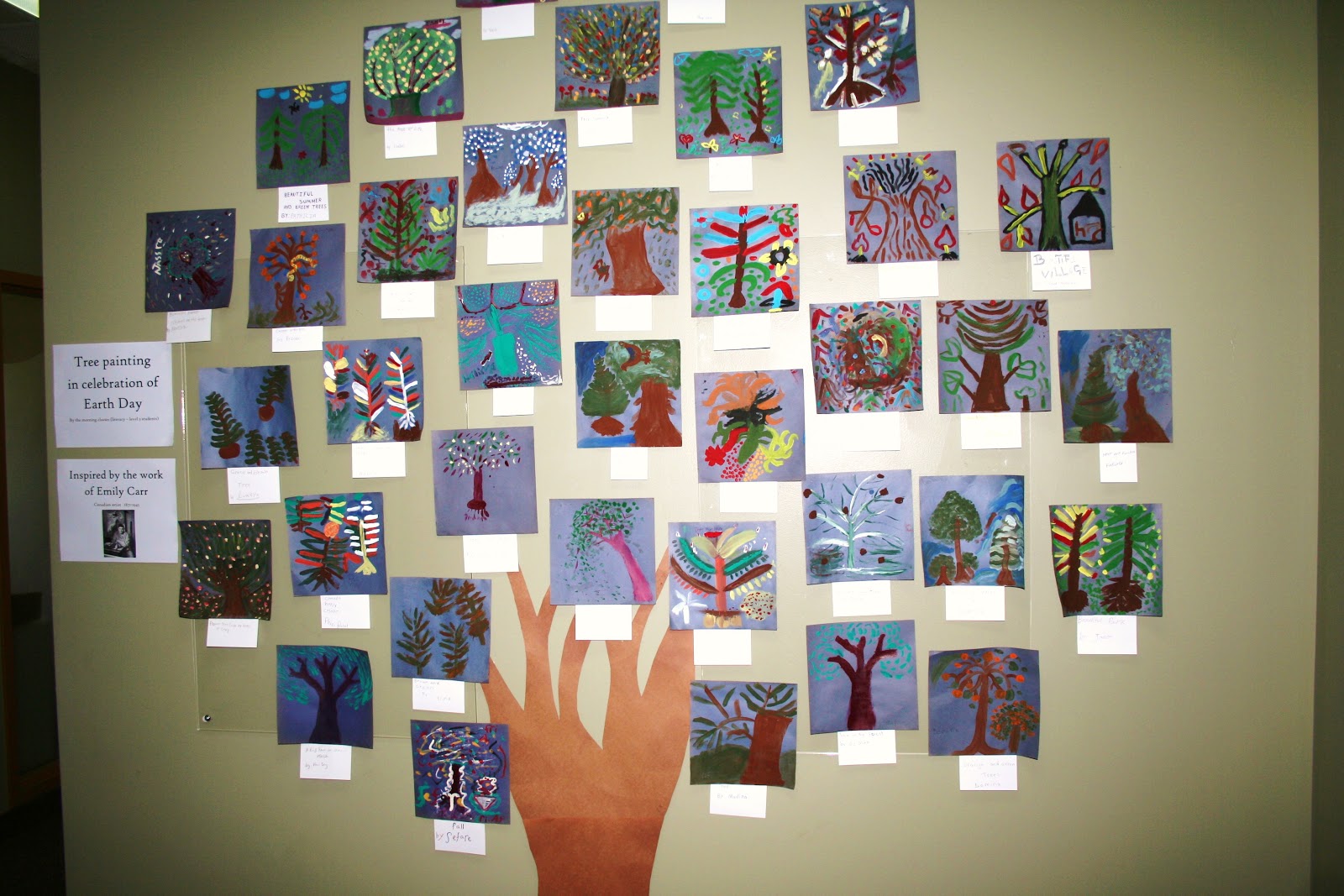
Concentration and creativity joined hands this Earth Day as students tried their hand at painting trees inspired by the late Emily Carr. My peer, B.B., guided the learners through Emily Carr images and noted how the painted lines showed movement. She found the idea for this project here: http://www.kinderart.com/arthistory/emilycarr.shtml.

The learners did 'air writing' of the movement, just tracing the shapes and lines in the air. Then the students got to it.


What really amazed me were the different interpretations of what a tree is.


 We then made a tree of all the trees.


It was interesting to see how people from different areas of world painted different styles of trees. The 'tree' in their mind was certainly not from the same corpus as Emily Carr's! What beautiful designs!

Amazingly, at our local art gallery an Emily Carr exhibit was showing at this time. This show was also featured in the local newspaper. A few teachers and a few students ventured out after school hours (during the free hours at the gallery) to visit the exhibit and experience Carr's art work in a new environment.  

Two of my colleagues, B.B. and A.B., entered this project into the TESL Ontario ESL Week Contest and won first place in the Photo/Collage Category! Here is a link to their outstanding work: http://www.teslontario.net/sites/default/files/webform/eslweek_instructors/Immigrant%20Women%27s%20Centre.jpg

Follow up activities can be found here:
Best of the Reader: Aboriginal People (graded stories of adults): http://www.bestofthereader.ca/Ebooks/Canada%27s_Aboriginal_People.pdf
Vancouver Art Gallery Educational Resources (may need to be adapted): http://www.museevirtuel-virtualmuseum.ca/sgc-cms/expositions-exhibitions/emily_carr/en/index.php 

Monday, 18 February 2013

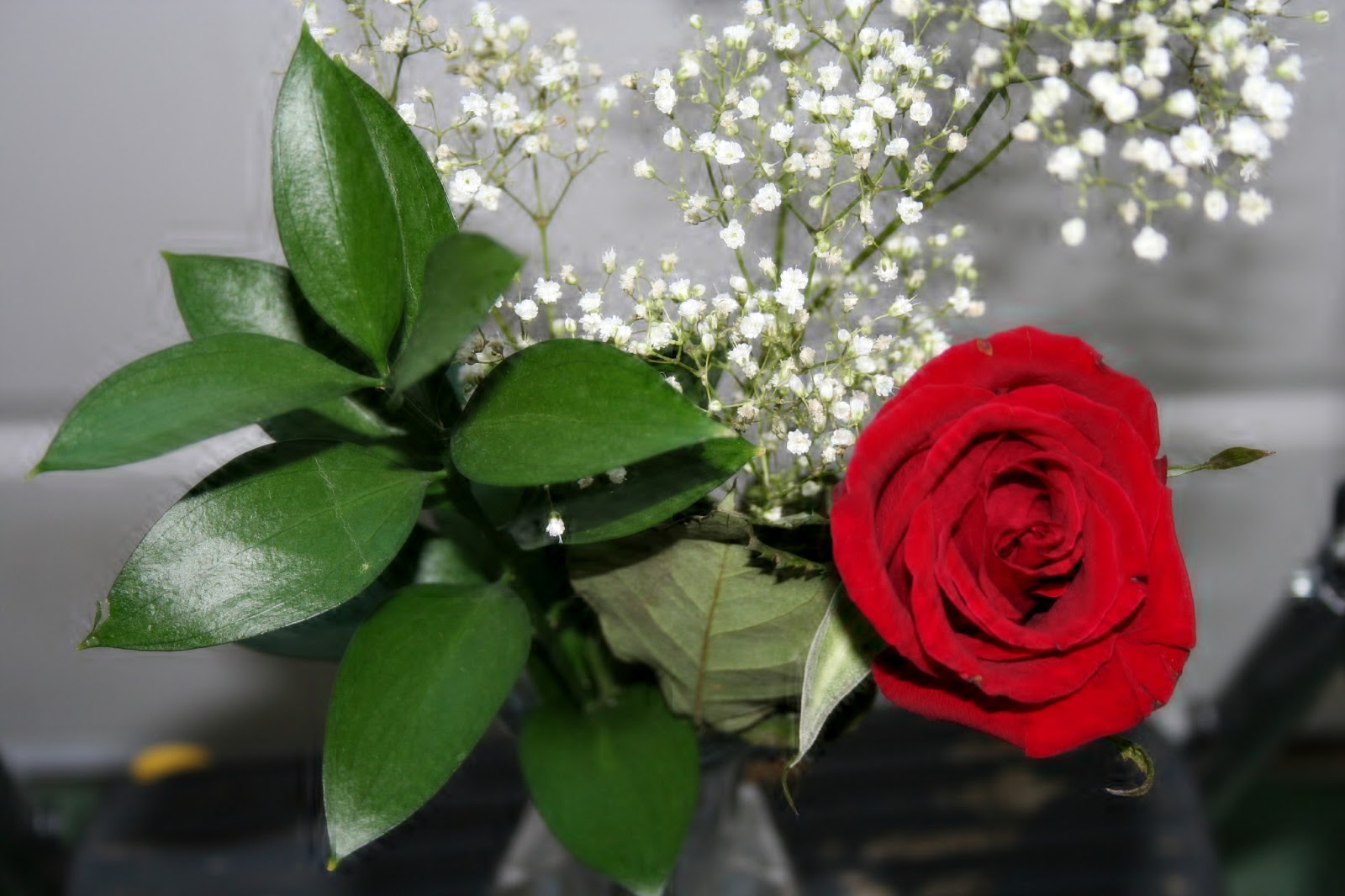
Beautiful Things - Roses are Red

What do you see?
How does it smell?
How does it feel?


A student surprised me this Valentine's Day with a rose!
What a great teaching gift to work on describing things!


Follow up with colour and rhyming practice:

Roses are red,
Violets are blue,
Sugar is sweet,
and so are _______.


Roses are red,
Violets are grey,
When I am with you,
I have a nice ________.


Roses are red,
Violets are plaid,
When we are apart,
I feel _________.

Outcomes: express spoken and written descriptions, fill in initial consonant sound in rhyming word groups

Sunday, 30 September 2012

Beautiful Things - Grapes

My next door neighbours have a backyard patio that is fully shaded by trellised grapevines. Green and purple concord grapes. I often peek at them through the lattice at the top of our fence. I often breathe in the sweet, fragrant scent of them as the wind flows through our bathroom window.


The questions for my Phase 2 students:
1. How do they smell?
2. How do they feel?
3. What do you see?
4. How do they taste?

In groups, the students explored the grapes and came up with some sentences.


Monday, 23 January 2012

Clove and Orange Pomander

Ever since grade 3 I have been making orange and clove pomanders for Christmas. My school teacher introduced this activity in class in 1985 and for some reason it really stuck with me. Perhaps it was the hands-on-ness, or the wonderful smell. I have made these in my ESL classes a few times, and each time was a success.

This year, my centre held an end of the year celebration (as there are diverse religious groups at the centre). I chose to lead this activity with the adult students and presented it as a natural air freshener for the kitchen or bathroom. I googled the history (e.g. on Wikipedia here), but decided not to go into too much detail during this celebration activity. I also showed some design ideas as mentioned below. This activity was done close to the end of the day and students were wanting to leave early, but when I showed them the task, they were quite interested. All the levels of students (e.g. from Literacy to LINC Level 5) sat together and worked on their own pomanders while chatting with each other and showing off their creations. The room smelled incredible and we were relaxed and just making stuff! Amazing!


A tip I have learned over the years is to start with pushing in 4 cloves at the top of the orange and another 4 at the bottom of the orange. This creates sturdy 'posts' to wrap the ribbon or yarn through. The ribbon will not slid around and off the orange. With the ribbon secured, I then develop the pattern I want with the remaining cloves. There are many image ideas on the web if you do an image search for orange and clove pomanders.


Outcomes: Listen to and follow instructions, ask for help, help peers, conceptualize and create a pattern